


Cookie Manufacturing in UAE: Process, Standards & How to Partner

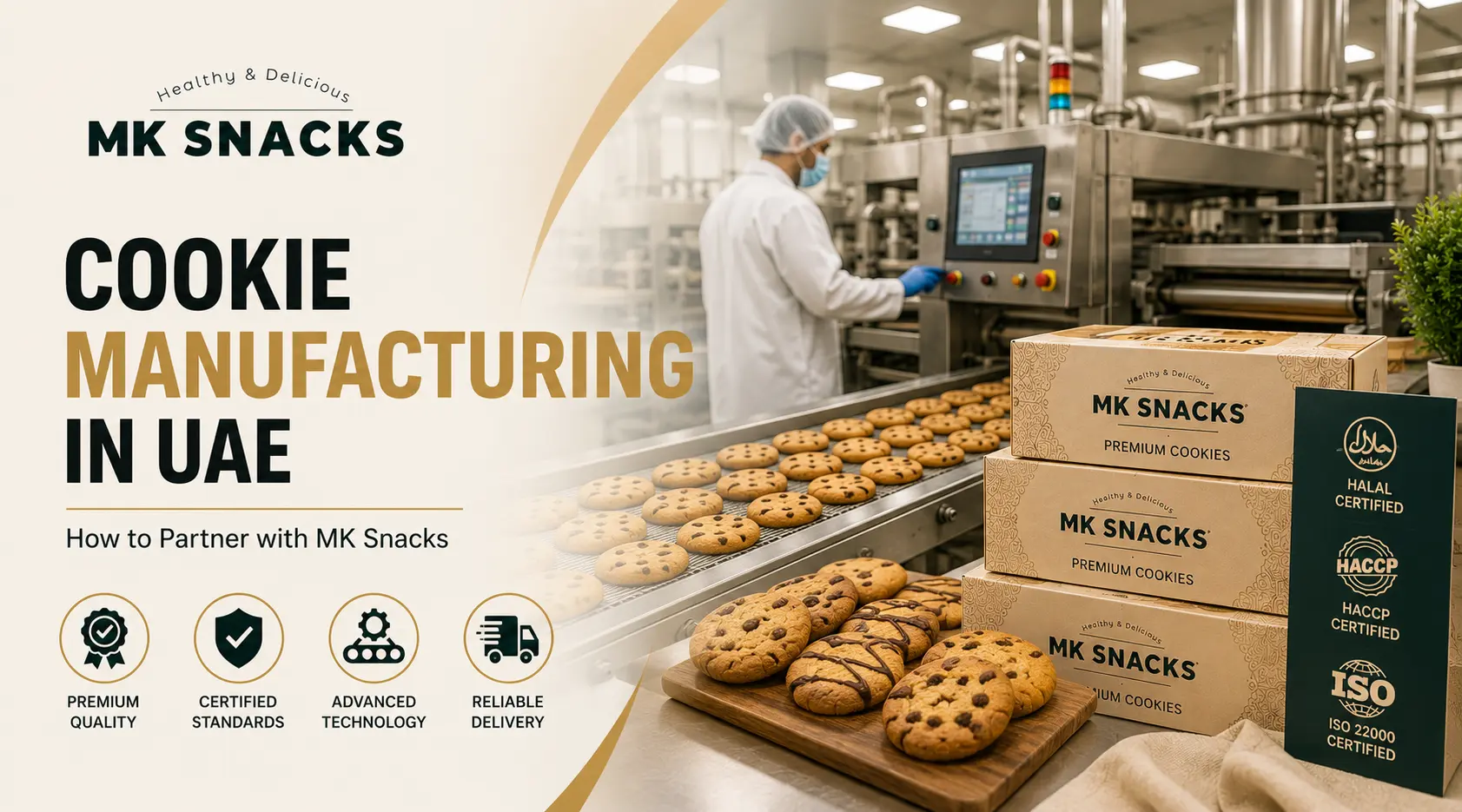
Most people never think about what goes into making a simple cookie. They see the package on a shelf and grab it without wondering about the facility that produced it, the equipment used, or the standards that ensure freshness and safety.
But if you run a retail business, distribute products, or want to launch your own brand, understanding cookie manufacturing in UAE becomes essential. Knowing how a cookie manufacturer in UAE operates directly impacts your purchasing decisions, partnership quality, and bottom line margins.
This guide walks you through the complete cookie manufacturing process. You’ll discover what modern facilities look like, why certifications matter, and how to partner with manufacturers who deliver consistent quality. Whether you’re a retailer seeking wholesale suppliers or an entrepreneur planning to launch your own product line, you’ll learn exactly what happens from ingredient to package.
Read our guide on how to buy bulk maamoul wholesale for purchasing insights.
The Complete Cookie Manufacturing Process in UAE
The process begins with ingredient preparation and quality verification. A cookie manufacturer in UAE receives raw materials like flour, sugar, oils, and flavorings in bulk. These ingredients are tested for quality before entering production. The first step ensures contamination never reaches your finished cookies.
Step 1: Ingredient Inspection and Preparation
Raw ingredients arrive at the facility in bulk containers. A cookie manufacturer in UAE inspects and verifies everything meets quality standards. Flour is sifted to remove impurities. Sugar is measured precisely. Oils are tested for freshness.
Flavorings like vanilla or cardamom are added in exact proportions. Nothing enters production without approval from quality control.
Step 2: Dough Mixing and Formation
Industrial mixers combine all ingredients uniformly. The dough rotates continuously for 10-15 minutes without lumps. A cookie manufacturer in UAE ensures the mixture becomes perfectly consistent.
Temperature is monitored carefully during this stage. If dough is too dry, liquid is added gradually. If too wet, flour is incorporated carefully. The dough must reach perfect consistency before moving forward.
Step 3: Cookie Cutting and Shaping
Automatic depositors place precise dough portions onto baking trays. Each depositor creates identical portions. No variation exists between cookies. This consistency is a trademark of quality cookie manufacturing in UAE.
For filled cookies like maamoul, the dough is filled automatically with date paste or nuts. The filling machine seals the dough around the filling precisely. Overfilled cookies waste product. Underfilled cookies disappoint customers.
Step 4: The Baking Process
Cookies enter industrial ovens at 170-190 degrees Celsius. A cookie manufacturer in UAE maintains oven temperatures using computerized controls. Too hot, and cookies burn. Too cool, and they remain undercooked.
Cookies bake on conveyor belts moving continuously through the heated chamber. Belt speed determines baking time. Most cookies require 8-12 minutes in the oven. The edges turn golden brown while centers become firm.
Step 5: Cooling Station
Hot cookies cannot be packaged immediately because they’re too soft. They’re placed on cooling conveyors where temperature drops gradually. Rapid cooling causes cracks. Gradual cooling preserves texture and appearance.
As cookies cool, moisture evaporates slowly. A cookie manufacturer in UAE monitors cooling temperatures carefully. Improper cooling results in stale cookies or broken products.
Step 6: Quality Inspection
Every single cookie passes through quality control. Automated detectors identify broken, discolored, or misshapen cookies. These are removed instantly. Nothing reaches packaging without approval.
Trained inspectors also perform random manual checks. They test cookie firmness, color, taste, and aroma. This dual-layer inspection ensures no defective products reach customers.
Step 7: Packaging and Storage
Approved cookies move to automatic packaging machines. Cookies are wrapped in food-grade packaging. Multiple cookies are grouped into boxes. Boxes are sealed and labeled.
Packaged products move to temperature-controlled storage areas. A professional cookie manufacturer in UAE keeps storage cool and dry. Humidity is controlled. This maintains freshness until delivery.
Total Production Timeline: 8-9 hours per batch
A typical batch produces 500-1,000 cookies. The entire process from raw ingredients to packaged product takes approximately 9 hours. This timeline allows a cookie manufacturer in UAE to complete 2-3 batches daily.
Problem Prevention Systems
A cookie manufacturer in UAE uses Hazard Analysis and Critical Control Points (HACCP). This system identifies potential problems before they occur. For cookie manufacturing, critical control points include ingredient storage temperature, oven temperature, and cooling duration.
If any parameter deviates, production stops. The operator investigates and corrects the issue. Production resumes only after confirming the problem is solved.
Certifications Explained: What They Mean
Certifications are more than fancy labels. They represent independent verification that a cookie manufacturer in UAE meets rigorous standards. Three certifications matter most for cookie production.
Halal ESMA Certification
This certification proves the cookie manufacturer in UAE follows Islamic dietary laws. ESMA (Emirates Authority for Standardisation and Metrology) inspects facilities. They verify no pork products or non-halal ingredients are used. Production equipment is separated from non-halal items.
The certification requires ongoing monitoring. ESMA inspectors visit facilities quarterly. They review ingredient suppliers. The cookie manufacturer in UAE must maintain complete documentation.
For Muslim-majority markets, halal certification is essential. It builds customer trust. It opens doors to markets that require this certification.
HACCP Certification
HACCP certification proves the cookie manufacturer in UAE has food safety systems. This system identifies hazards and establishes controls. Temperature monitoring, pest prevention, and hygiene protocols are documented.
Obtaining HACCP requires formal training. Managers complete certified courses. They implement systems and keep detailed records. An external auditor reviews everything annually.
Retailers require HACCP certification. Importing countries demand it. For any cookie manufacturer in UAE, obtaining this certification is non-negotiable.
ISO 22000 Food Safety Management System
ISO 22000 is the highest food safety standard. It encompasses everything HACCP includes plus much more. The system covers supplier management, product traceability, and crisis response protocols.
Implementing ISO 22000 takes 6-12 months. Consultants help establish procedures. Staff receives training. Once implemented, annual audits maintain certification.
A cookie manufacturer in UAE with ISO 22000 demonstrates professional operations. It signals serious commitment to quality.
Manufacturing Capacity and Flexibility
How much can a cookie manufacturer in UAE produce? Capacity varies widely. A small operation produces 500-1,000 cookies daily. A large facility produces 10,000-20,000 cookies daily. Most facilities operate at 60-80% capacity.
Understanding Batch Sizes and MOQ
Rush Orders and Customization
Some cookie manufacturers in UAE accept rush orders at premium prices. Standard lead time might be 2-3 weeks. Rush orders might be completed in 5-7 days. This flexibility costs more but solves urgent needs.
Customization is another capability of professional cookie manufacturers in UAE. Want different flavoring? different packaging? and custom-sized cookies? Most manufacturers can accommodate if you order sufficient quantities.
How to Partner with a Cookie Manufacturer in UAE
Partnering with a cookie manufacturer in UAE requires understanding what each side needs. The manufacturer needs stable, predictable orders. You need consistent quality and reliable delivery.
The Partnership Process
Start by documenting your specific needs clearly. For example, include monthly volume requirements, packaging preferences, budget constraints, and delivery timelines. Once you compile this information, share it with 3–5 cookie manufacturers in the UAE. As a result, you will receive accurate and comparable quotes from multiple suppliers.
Next, request samples from each manufacturer. Most manufacturers provide samples at cost only. Then, evaluate the taste, texture, color, and freshness carefully. After that, compare the samples with your expectations and quality standards.
Finally, request detailed quotations from each supplier. A professional cookie manufacturer in the UAE will provide pricing based on your order quantity. In addition, they will outline payment terms, delivery timelines, and available volume discounts.
Verify certifications directly. Contact ESMA to confirm halal certification. Call the certification body to verify HACCP or ISO 22000. Don’t rely solely on the manufacturer’s claims.
Visit the facility if possible. Many cookie manufacturers in UAE welcome client visits. You’ll see operations firsthand. You’ll meet key personnel. This builds confidence in the partnership.
Payment Terms and Contracts
Standard payment is 50% advance, 50% on delivery. Some manufacturers offer net 15 or net 30 payment terms after you establish a relationship. Larger orders typically receive better payment terms.
A written agreement protects both parties. The contract specifies quantity, price, delivery date, quality standards, and payment terms. It defines what happens if quality issues arise or deadlines are missed.
Why Direct Manufacturer Partnership Matters
Buying directly from a cookie manufacturer in UAE offers advantages over distributors. The price difference is substantial. A distributor buys from a manufacturer, adds 20-30% markup, then sells to you. Buying directly eliminates this middleman cost.
Quality is fresher from a direct manufacturer. Products go from production to your store without intermediary storage. Shelf life is maximized. Customers receive fresher products.
Communication is direct and faster. Problems are solved immediately. Custom requests are handled faster. A professional cookie manufacturer in UAE values long-term relationships and will prioritize your needs.
Learn more about direct sourcing in our guide to buying bulk maamoul wholesale.
Choosing Your Cookie Manufacturing Partner in UAE
Ready to source cookies for your business? View our shop to see our product range. Learn more about our company mission and commitment to quality. Contact us to discuss your cookie manufacturing needs. You can also read our founder’s story to understand our heritage and expertise.
FAQs About Cookie Manufacturing in UAE
What equipment makes quality cookies?
How long is cookie manufacturing from order to delivery?
Standard timeline is 2-3 weeks. This includes ingredient preparation, production, packaging, and quality verification. The first week handles setup and planning. Production takes 3-5 days. Packaging and logistics take another 3-7 days. Rush orders can be completed in 5-7 days at premium rates.
What certifications matter most?
Three certifications are essential. Halal ESMA certification confirms Islamic dietary compliance. HACCP certification verifies food safety systems exist. ISO 22000 represents the highest food safety standard. Any reputable cookie manufacturer in UAE should have at least two of these certifications.
How do manufacturers ensure quality?
Quality is built into every stage. Raw materials are tested before use. Production parameters are monitored continuously. Every cookie is inspected for defects. Rejected cookies are removed. Testing for taste, texture, and color is regular. Complete documentation allows traceability of any issues.
What batch size flexibility exists?
Most cookie manufacturers in UAE work with batch sizes of 500-5,000 units. Some accept smaller quantities at premium pricing. Larger quantities receive volume discounts. Discussing your needs with the manufacturer often reveals flexibility not advertised.
Can recipes be customized?
Yes, customization is possible. Different flavorings, fillings, or shapes require different production settings. Customization typically requires minimum orders of 500-1,000 units. Lead times for custom products are longer than standard products.
What payment terms are typical?
Standard payment is 50% advance, 50% on delivery. Some manufacturers offer net 15 or net 30 payment terms for established customers. Larger orders may receive better payment terms. Payment terms are negotiable based on order volume and customer history.
How do I find the right cookie manufacturer?
Start by defining your requirements clearly. Request samples from multiple manufacturers. Verify certifications independently. Visit facilities to see operations. Compare pricing and delivery timelines. Choose based on quality, reliability, and partnership fit.